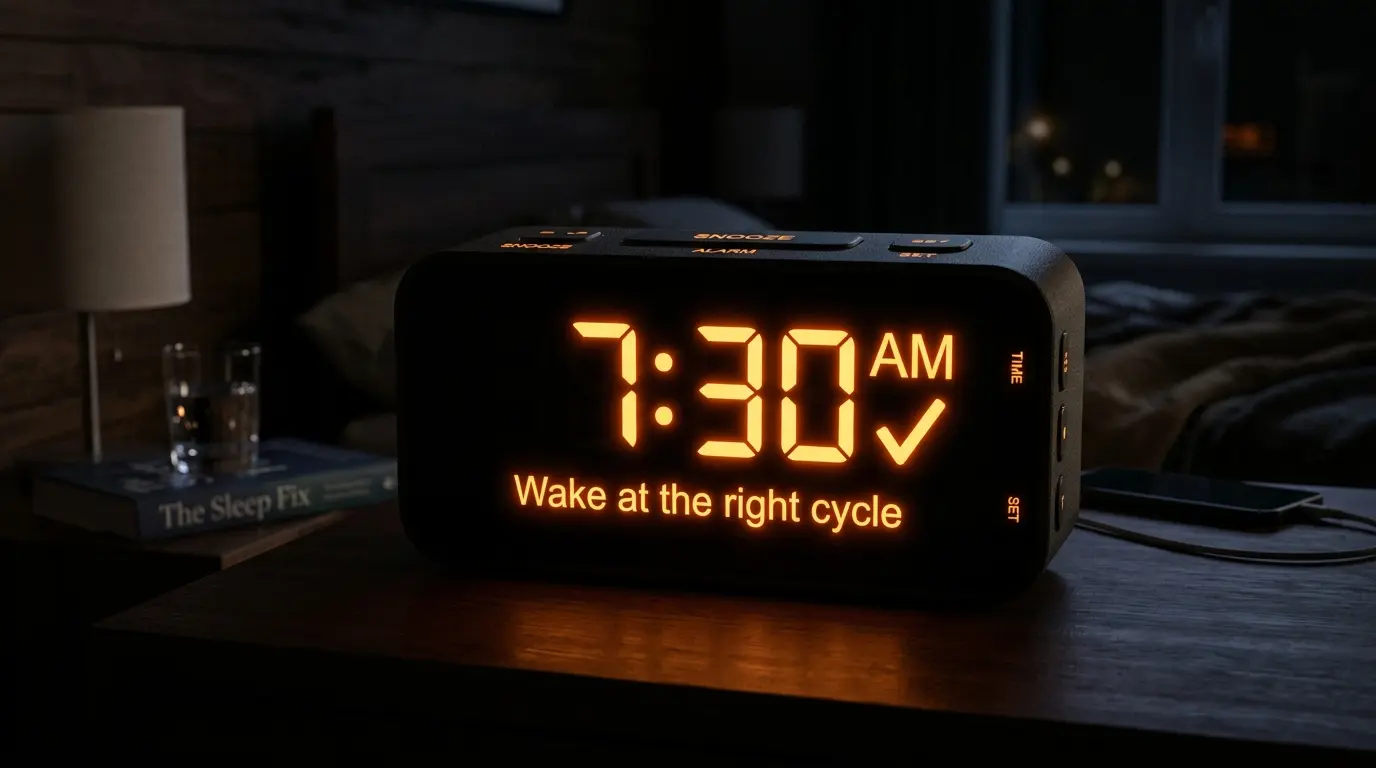
1. Why Do You Wake Up Exhausted After 8 Hours of Sleep?
Waking up feeling groggy and disoriented — despite spending a full eight hours in bed — is one of the most common health complaints of the modern era. To understand this paradox, you need to recognize that sleep quality is not measured exclusively by total duration. It is deeply tied to the physiological architecture of sleep itself and the precise timing of when you wake.
The core problem lies in when you wake up relative to your sleep cycles. The human brain cycles through a series of complex, recurring phases throughout the night, each lasting approximately 90 to 120 minutes. These cycles move through light sleep, deep slow-wave sleep, and REM (Rapid Eye Movement) sleep before restarting. If your alarm fires in the middle of deep sleep (Stage N3), the result is a physiological disruption known as Sleep Inertia — a state of grogginess, cognitive fog, impaired motor control, and disorientation that can persist for 30 to 60 minutes after waking.
The solution is the Sleep Calculator: a science-backed tool that aligns your wake-up time with the natural end of a sleep cycle, so the transition from sleep to wakefulness is smooth, effortless, and genuinely refreshing. In this comprehensive guide, we’ll cover the neuroscience of sleep cycles, how bedtime and wake-up calculators work, REM sleep, circadian rhythm, sleep debt, nap science, and the best devices for tracking your sleep.
2. What Is a Sleep Calculator and How Does It Work?
A sleep calculator is a mathematical and algorithmic tool grounded in the science of chronobiology — the study of biological timing systems. Its core premise is simple: human sleep does not flow as one continuous, uniform block. Instead, it consists of repeating cycles, each approximately 90 minutes in duration.
Rather than asking “how many total hours did I sleep?”, a sleep calculator divides the night into 90-minute blocks. Because the average adult requires 4 to 6 complete cycles per night (roughly 6 to 9 hours), the calculator identifies the exact window when you should fall asleep — or set your alarm — so you wake at the natural end of a cycle, during light sleep, rather than in its depths.
Advanced sleep calculators also account for sleep latency — the average time it takes to fall asleep after lying down, approximately 15 minutes for most healthy adults.
Types of Sleep Calculators
| Type | Best Used When |
|---|---|
| Bedtime Calculator | You have a fixed wake-up time and need to know when to go to bed |
| Wake Up Calculator | You’re going to sleep now and want the best alarm times |
| Nap Calculator | You want to nap without waking up groggy |
| Sleep Debt Calculator | You want to quantify your accumulated sleep deficit |
The practical value of these tools is significant. Clinical data consistently shows that completing uninterrupted sleep cycles and waking during light sleep dramatically improves mood stability, cognitive sharpness, reaction time, and memory consolidation.
3. The Science Behind Sleep Cycles
3.1 What Is a Sleep Cycle?
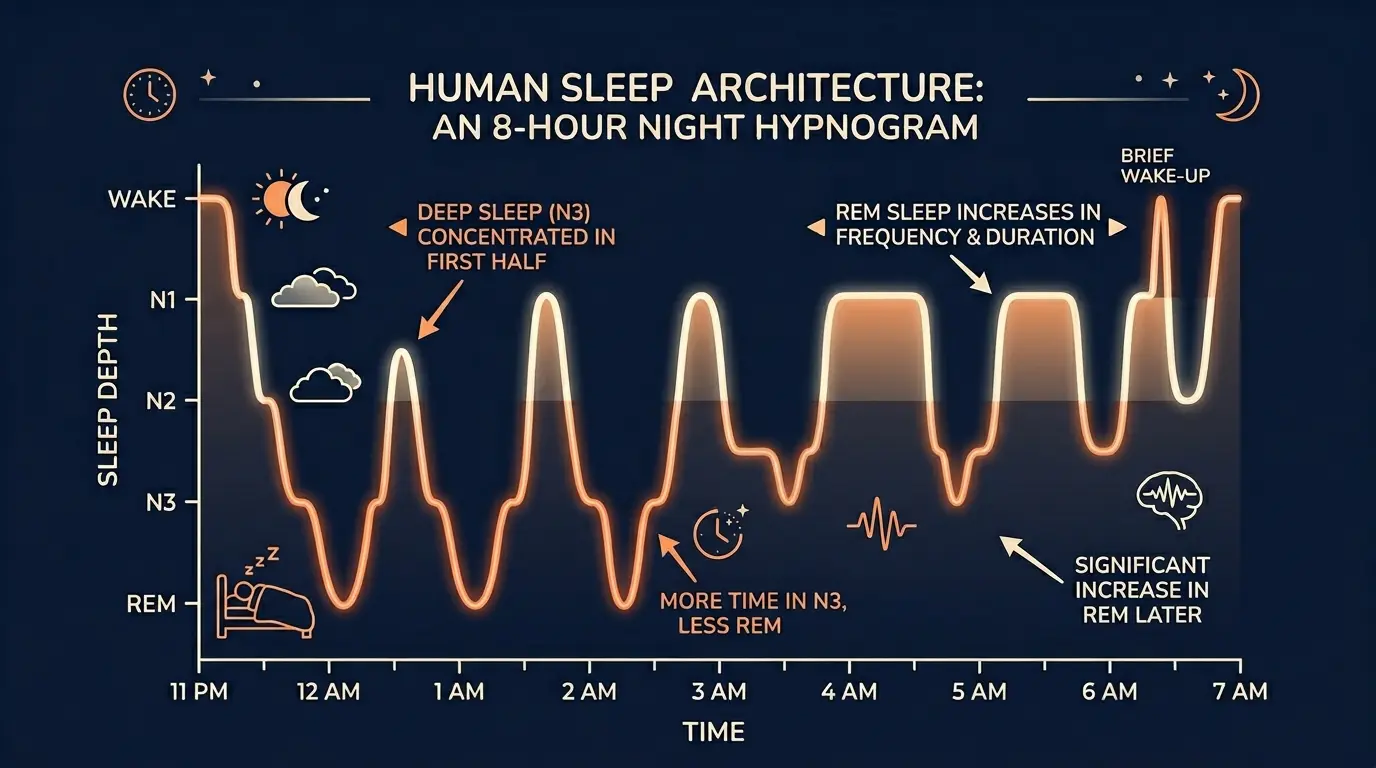
A sleep cycle is a recurring physiological and neurological process that allows the brain and body to perform essential maintenance: repairing cellular tissue, clearing metabolic waste from the brain, processing memories, and regulating hormones. Each cycle lasts approximately 90 minutes and repeats 4 to 6 times per night in healthy adults.
The reason for this specific rhythm lies in an internal biological process called the Ultradian Rhythm — a natural oscillation of brain activity that moves from wakefulness, through light sleep, deep sleep, then back up to the high neurological activity of REM, before starting again.
Completing enough full cycles (4–6 per night) is essential to achieving the right physiological balance between physical restoration and mental recovery.
3.2 The 4 Stages of Sleep
Human sleep is divided into two primary categories: NREM (Non-Rapid Eye Movement) sleep, which has three sub-stages (N1, N2, N3), and REM sleep. The proportion of time spent in each stage shifts across the night - deep sleep dominates the early cycles, while REM sleep expands in the later hours toward morning. According to the National Sleep Foundation, all four stages are essential for cognitive and physical health.
Stage 1 — NREM 1 (Light Transitional Sleep)
- Duration: 1–7 minutes
- The boundary between wakefulness and sleep. Muscle activity slows, heart rate decreases, and hypnic jerks (sudden muscle twitches) may occur
- Easily disrupted; the sleeper may not realize they fell asleep
- Approximately 5% of total sleep time
Stage 2 — NREM 2 (True Light Sleep)
- Duration: 10–25 minutes per cycle, increasing as the night progresses
- Body temperature drops, breathing and heart rate become more regular
- Characterized by two distinct brainwave patterns: Sleep Spindles (bursts of oscillatory activity) and K-complexes — both protect the brain from external stimulation
- Accounts for 45–50% of total sleep
Stage 3 — NREM 3 (Deep Slow-Wave Sleep)
- Duration: 20–40 minutes, concentrated in the first half of the night
- Dominated by slow, high-amplitude delta waves. Heart rate and breathing reach their lowest points
- Critical for physical recovery: tissue repair, bone growth, immune reinforcement, and the clearance of neurotoxic waste via the glymphatic system
- Growth hormone is released almost exclusively during this stage
- Accounts for 15–20% of total sleep; very difficult to wake from
Stage 4 — REM Sleep
- Duration: begins at ~10 minutes and extends up to 60 minutes in morning cycles
- The brain is nearly as active as during wakefulness; vivid dreams occur
- The body enters muscle atonia — temporary skeletal muscle paralysis — to prevent acting out dreams
- Essential for memory consolidation, emotional processing, and creative thinking
- Accounts for 20–25% of total sleep
| Stage | Type | Brain Activity | Body State | Primary Function | % of Sleep |
|---|---|---|---|---|---|
| N1 | NREM | Slowing | Relaxing, possible jerks | Sleep transition | 5% |
| N2 | NREM | Spindles + K-complexes | Deep relaxation | Memory regulation | 45–50% |
| N3 | NREM | Slow delta waves | Maximum stillness | Physical restoration | 15–20% |
| REM | REM | Near-waking activity | Full muscle paralysis | Memory, dreams | 20–25% |
4. Using a Sleep Calculator Step by Step
4.1 Bedtime Calculator
Use this when you have a fixed wake-up time and want to find the optimal time to go to bed.
Example: Wake up at 7:00 AM
| Cycles | Sleep Duration | Go to bed at | Earliest to bed |
|---|---|---|---|
| 6 cycles | 9 hours | 10:00 PM | 9:45 PM |
| 5 cycles ✅ | 7.5 hours | 11:30 PM | 11:15 PM |
| 4 cycles | 6 hours | 1:00 AM | 12:45 AM |
The 5-cycle option (7.5 hours) is the optimal target for most adults. The 15-minute buffer accounts for average sleep latency — the time spent drifting off after lying down.
4.2 Wake-Up Calculator
Use this when you’re going to bed now and want the best alarm times.
Example: Falling asleep at 11:15 PM (in bed at 11:00 PM)
| Cycles | Wake Up At | Notes |
|---|---|---|
| 4 cycles | 5:15 AM | Minimum viable |
| 5 cycles ✅ | 6:45 AM | Recommended |
| 6 cycles | 8:15 AM | Maximum rest |
Setting your alarm to coincide with the end of a cycle means it fires during N1 or N2 light sleep, making the transition to wakefulness feel natural and effortless rather than jarring.
Enter your bedtime or wake-up goal and instantly get your optimal sleep and wake windows based on 90-minute cycles.
5. REM Sleep — A Deep Dive
5.1 What Is REM Sleep?
REM sleep is a neurologically unique state that occurs approximately every 90 minutes. Neuroscientists describe it as a highly active brain inside a paralyzed body. During REM, the brain generates electrical activity nearly identical to wakefulness — while the skeletal muscles remain in complete atonia.
Beyond its role as the stage where most vivid dreaming occurs, REM is critical for several high-level cognitive functions:
Memory and Learning: The brain forms new synaptic connections and strengthens existing ones. Skills acquired during the day — both procedural and declarative — are sorted, consolidated, and transferred to long-term memory during REM.
Emotional Regulation: The amygdala (the brain’s emotional processing center) is highly active during REM. This stage effectively acts as overnight emotional therapy — processing traumatic or stressful experiences in a neurochemically safe environment (serotonin and norepinephrine are suppressed during REM) and reducing their emotional intensity.
Creativity and Pattern Recognition: The loose, associative brain activity during REM facilitates novel connections between seemingly unrelated concepts - the neurological basis of creative insight. Harvard Medical School’s Division of Sleep Medicine describes REM as the stage most critical for emotional memory processing and creative problem-solving.
5.2 How Much REM Sleep Do You Need?
| Age Group | REM as % of Sleep | Nightly REM (~8 hrs) |
|---|---|---|
| Infants & toddlers | 30–40% | 2.5–3 hrs |
| Children | 25–30% | ~2 hrs |
| Adults | 20–25% | 90–120 min |
| Older adults (65+) | 15–20% | ~1.5 hrs |
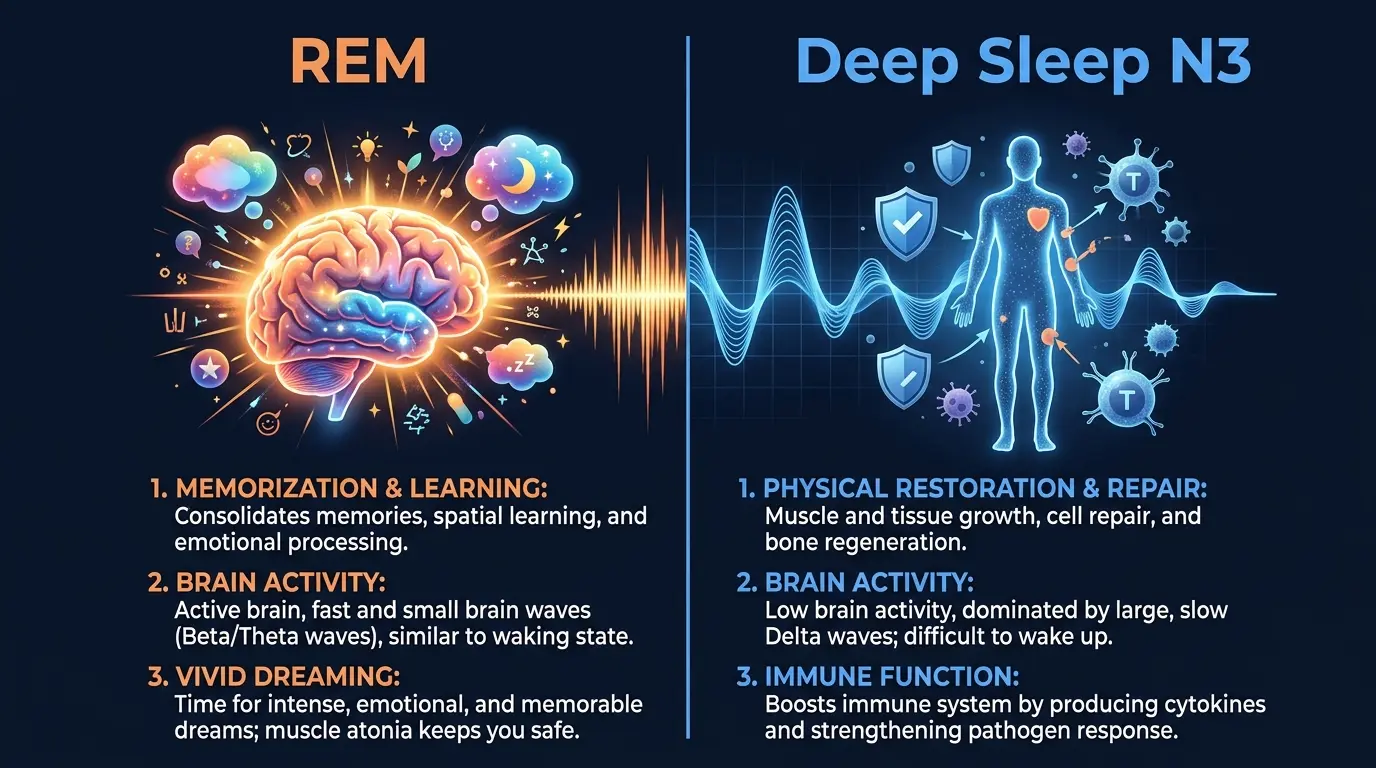
5.3 REM vs. Deep Sleep — Key Differences
| Comparison | REM Sleep | Deep Sleep (N3) |
|---|---|---|
| Brain activity | Near-waking (high) | Slow delta waves |
| Dreams | Vivid, complex | Rare, fragmented |
| Primary purpose | Memory, emotion, creativity | Physical repair, immunity |
| % of total sleep | 20–25% | 15–20% |
| Concentration during night | Increases toward morning | Concentrated in first half |
One of the most common misconceptions is treating “deep sleep” and “REM sleep” as interchangeable. Both are essential, but they serve fundamentally different biological roles - and losing either has measurable, distinct consequences.
6. Circadian Rhythm — Your Internal Clock
6.1 What Is Circadian Rhythm?
The circadian rhythm - commonly called the biological clock - is a sophisticated internal timing system operating on a roughly 24-hour cycle. It is governed by a cluster of approximately 20,000 neurons in the brain’s suprachiasmatic nucleus (SCN), located in the hypothalamus.
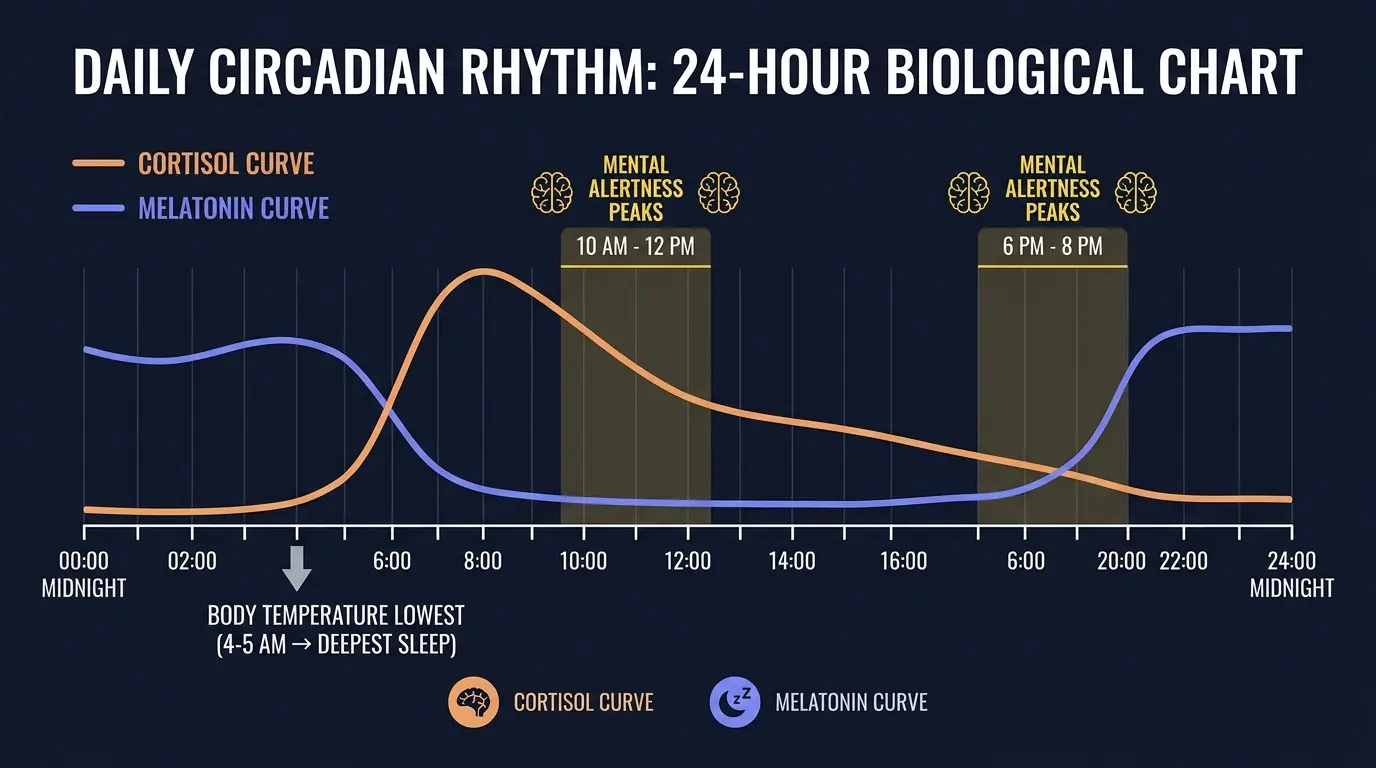
This master clock doesn’t merely regulate sleep and wakefulness. It orchestrates a full physiological symphony including: core body temperature fluctuations, hormone secretion (cortisol, melatonin, growth hormone), appetite and digestion cycles, immune function timing, and even cognitive peak performance windows.
6.2 How Light Affects Your Clock
Light is the single most powerful environmental signal for synchronizing your circadian rhythm with the external world. Specialized retinal cells (intrinsically photosensitive retinal ganglion cells — ipRGCs) connect directly to the SCN and transmit light intensity data.
Morning sunlight: Suppresses melatonin, triggers cortisol and histamine release, signaling the brain to begin alertness. Morning light exposure also anchors your sleep timing for the following night.
Evening darkness: Signals the pineal gland to begin melatonin production, gradually preparing the body for sleep.
Blue light from screens: Devices emit blue light (peak ~464nm) that suppresses melatonin at roughly double the potency of other light wavelengths, and can delay your biological clock by up to 3 hours - essentially tricking your brain into thinking it’s still midday. If you use screens in the evening, blue light blocking glasses like KLIM Optics are a practical, science-backed solution to reduce this effect before bed.
6.3 Social Jet Lag
Going to bed and waking at radically different times between workdays and weekends causes a phenomenon called Social Jet Lag — a mismatch between your internal biological rhythm and your social schedule. Research links chronic social jet lag to increased risk of obesity, insulin resistance, cardiovascular disease, and impaired cognitive function. The fix: maintain consistent sleep and wake times 7 days a week.
7. Sleep Calculator by Age
Sleep requirements are not static. They shift dramatically across life stages, driven by neurological development, hormonal changes, and metabolic demands. The CDC and National Sleep Foundation (NSF) define these ranges:
| Age Group | Recommended Sleep |
|---|---|
| Newborns (0–3 months) | 14–17 hours |
| Infants (4–11 months) | 12–15 hours |
| Toddlers (1–2 years) | 11–14 hours |
| Preschool (3–5 years) | 10–13 hours |
| School age (6–13 years) | 9–11 hours |
| Teenagers (14–17 years) | 8–10 hours |
| Young adults (18–25) | 7–9 hours |
| Adults (26–64) | 7–9 hours |
| Older adults (65+) | 7–8 hours |
Critical insight for teenagers: Adolescents undergo a biological phenomenon called Sleep Phase Delay — a genuine hormonal shift that pushes melatonin release approximately 2 hours later than in adults or children. This makes it physiologically impossible for most teens to fall asleep before 11 PM. It is not laziness; it is neurobiology. The mismatch between this shifted rhythm and early school start times is a significant driver of adolescent chronic sleep deprivation.
8. Nap Calculator — The Science of Power Naps
8.1 Why Naps Work
The natural post-lunch energy dip (typically between 1 PM and 3 PM) reflects a minor trough in the circadian rhythm — a vestigial remnant of a biphasic sleep pattern common in human history. A strategically timed nap during this window can dissipate accumulated sleep pressure (adenosine buildup) and restore alertness without meaningfully disrupting nighttime sleep.
8.2 Types of Naps and Their Science
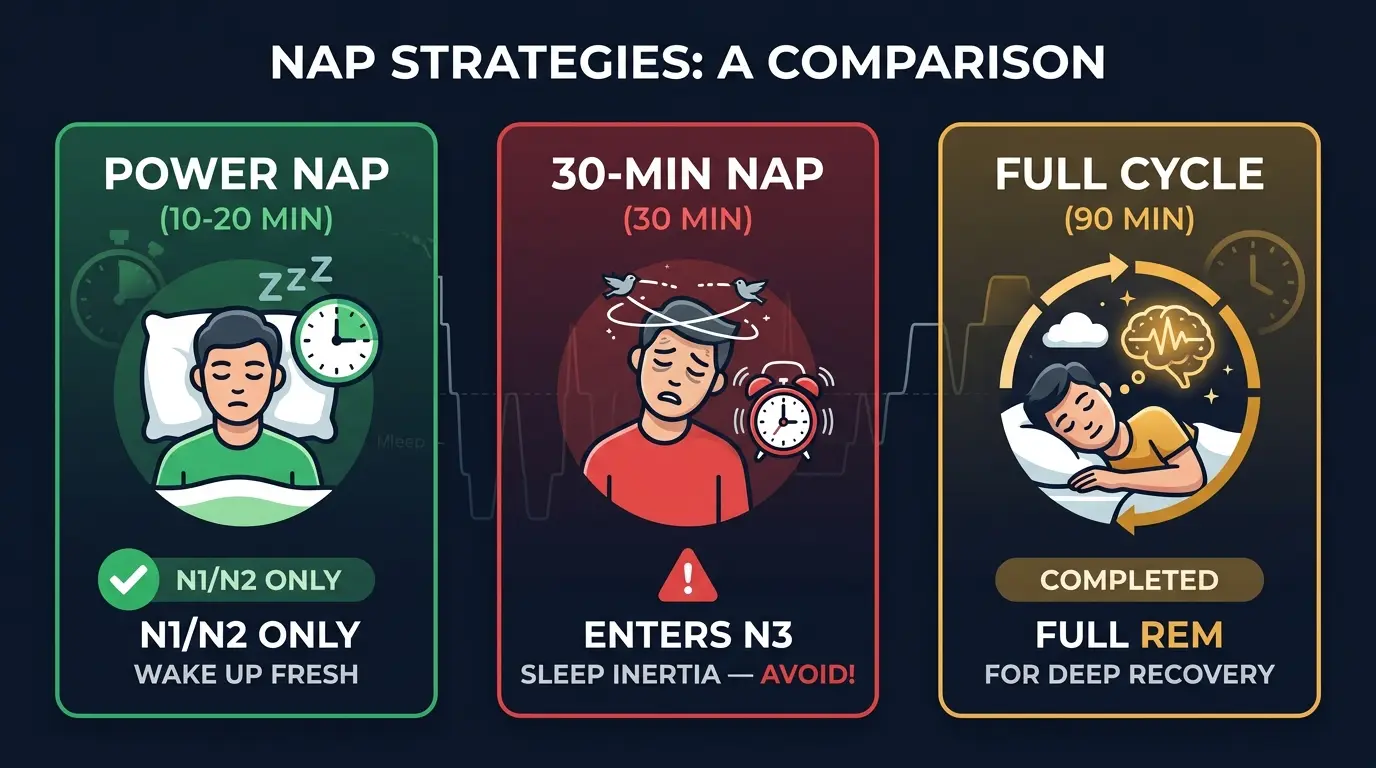
Power Nap (10–20 minutes) Best for most people
- Stays within N1 and N2 — no deep sleep entry
- Produces immediate gains in alertness, attention, and motor performance
- No sleep inertia — you wake refreshed and ready immediately
- A landmark NASA study found that a 26-minute nap improved pilot performance by 34% and alertness by 54% - a finding confirmed by the NIH
30-Minute Nap — Avoid
- The body begins entering N3 deep sleep
- Forced awakening from deep sleep causes severe grogginess and cognitive impairment
- Not a productive nap length
Full Cycle Nap (60–90 minutes) — For deeper recovery
- Completes one full sleep cycle including REM
- Beneficial for creative work, memory consolidation, and physical recovery
- Waking at cycle end minimizes sleep inertia
- Should not be taken after 3 PM to avoid disrupting nighttime sleep
Practical nap calculator example: It’s 2:00 PM and your energy is crashing.
- Power nap: wake at 2:20 PM
- Full cycle: wake at 3:30 PM
9. Sleep Debt Calculator
What Is Sleep Debt?
Sleep debt (also called sleep deficit) is the quantifiable gap between the sleep your body biologically requires and the sleep it actually receives. The brain does not forget lost sleep hours — they accumulate, creating a mounting neurological deficit with measurable consequences: impaired immune function, elevated cortisol, increased insulin resistance, weight gain, emotional dysregulation, and accelerated cognitive decline.
Calculating Your Sleep Debt
A straightforward formula:
Daily Deficit = Target Sleep − Actual Sleep Total Debt = Daily Deficit × Number of Days
Example: Your optimal sleep is 8 hours. Due to work pressure, you slept only 6 hours per night for 5 workdays.
- Daily deficit: 8 − 6 = 2 hours
- Weekly debt: 2 × 5 = 10 hours
That’s more than a full extra night of sleep owed to your body — with real physiological consequences.
Can You Pay Back Sleep Debt?
Yes — but not through a single marathon sleep session. The brain’s restoration process requires a gradual repayment strategy:
- Add 1–2 extra hours on weekend nights
- Advance bedtime by 30–60 minutes each night during the following week
- Expect full recovery from significant sleep debt to take 7–14 days
Attempting to compensate with one long sleep disrupts the circadian rhythm and causes additional social jet lag — often making things worse.
10. Sleep Disorders — When to See a Doctor
Optimizing sleep timing and sleep hygiene resolves most sleep quality issues. But persistent fatigue despite 8+ hours of sleep may indicate a structural or medical condition requiring specialist evaluation.
Common Sleep Disorders
Insomnia Chronic difficulty initiating or maintaining sleep, or waking too early without being able to return to sleep. Clinicians use the Epworth Sleepiness Scale (ESS) for initial screening — a questionnaire rating likelihood of dozing during 8 routine activities. Scores of 0–10 are normal; 11 and above indicate excessive daytime sleepiness requiring investigation.
Obstructive Sleep Apnea (OSA) A mechanical disorder where the throat muscles relax excessively, repeatedly blocking the airway and fragmenting sleep. The STOP-BANG questionnaire screens for OSA risk using 8 criteria: Snoring, Tired, Observed apnea, high blood Pressure, BMI > 35, Age > 50, Neck circumference > 40cm, Gender (male). A score of 5 or higher indicates high OSA risk requiring a sleep study.
Circadian Rhythm Disorders Include Delayed Sleep Phase Syndrome (common in teens and night owls), Shift Work Disorder, and Jet Lag Disorder.
When to Consult a Sleep Physician
Seek professional evaluation if you experience:
- Persistent exhaustion despite 8+ hours of sleep, even after improving sleep hygiene
- Loud snoring accompanied by gasping or observed breathing pauses
- Chronic insomnia affecting work performance or daily functioning
- Epworth Sleepiness Scale score above 10
- Unexplained morning headaches or frequent nighttime awakenings
11. Sleep Tracking Apps and Wearable Technology
Technology has transformed our ability to monitor sleep cycles outside of clinical sleep labs. Both smartphone apps and wearable devices can track your cycles and help you apply sleep calculator principles in real life.
11.1 Best Sleep Calculator Apps
| App | Platform | Technology | Cost |
|---|---|---|---|
| Sleep Cycle | iOS / Android | Sound analysis + accelerometer | Free / Premium |
| SleepScore | iOS / Android | Non-contact sonar technology | Free / Premium |
| Pillow | iOS | Apple Watch integration | Free / Premium |
| Sleep as Android | Android | Comprehensive + wearable support | Free / Premium |
Sleep Cycle is widely considered the leader for smart alarm functionality — it monitors breathing patterns and micro-movements via the phone microphone, then triggers the alarm within a user-defined window when it detects you’re in light sleep.
SleepScore uses a proprietary sonar system — emitting inaudible sound waves that bounce off the sleeping body — to determine breathing rate and body movement, enabling stage classification without requiring any worn device.
11.2 Best Wearable Sleep Trackers
Wearables provide richer physiological data through optical sensors measuring heart rate (HR), heart rate variability (HRV), blood oxygen saturation (SpO2), and skin temperature.
| Device | Standout Feature | Accuracy |
|---|---|---|
| Oura Ring 4 | Unobtrusive form, exceptional HRV + staging | Very high |
| Apple Watch (latest) | Vitals app, medical-grade sensing | High |
| Fitbit Charge 6 | Sleep Score, great price-to-performance | Good |
| Garmin (Venu/Forerunner) | Body Battery, athlete-focused | Good |
For those serious about sleep data, the Fitbit Charge 6 offers the best balance of accuracy and price on Amazon - featuring Sleep Score, SpO2 tracking, and detailed REM/deep sleep breakdown at a fraction of the cost of clinical sleep studies.
12. Alternative Sleep Patterns
The widely accepted idea that humans must sleep in one continuous 8-hour block (monophasic sleep) is a relatively recent cultural norm, largely rooted in the industrialization of work schedules and artificial lighting.
Biphasic Sleep
Historical research by sleep historian Roger Ekirch documented that pre-industrial humans naturally slept in two segments: a “first sleep” of 4 hours (roughly 9 PM to 1 AM), a period of quiet wakefulness lasting 1–2 hours (used for reading, prayer, or socializing), followed by a “second sleep” until dawn.
The modern version — common in Mediterranean cultures — combines a 5–6 hour core nighttime sleep with a 20–90 minute siesta in the early afternoon. This pattern aligns well with natural circadian troughs and is supported by research showing cognitive benefits.
Polyphasic Sleep — A Cautionary Note
Polyphasic schedules divide sleep into multiple short blocks across 24 hours:
- Everyman: 3-hour core sleep + three 20-minute naps
- Uberman: Six 20-minute naps = only 2 hours total per day
- Dymaxion: Four 30-minute naps = 2 hours total
Medical Warning: Uberman, Dymaxion, and similar extreme schedules cause severe physiological deprivation of slow-wave deep sleep (N3). There is no rigorous long-term scientific evidence supporting their safety or efficacy. These patterns risk impaired immune function, cognitive degradation, and cardiovascular strain. Do not attempt without medical supervision, if at all.
13. Science-Backed Sleep Optimization Tips
Aligning your sleep calculator timings with actual sleep quality requires disciplined attention to sleep hygiene - the environmental and behavioral practices that build and protect the architecture of healthy sleep.
1. Fixed schedule: Go to bed and wake up at the same time every day — including weekends. Consistency locks in your circadian rhythm’s timing.
2. Block blue light: Power down screens at least 2 hours before bed. Blue light (~464nm) suppresses melatonin more potently than any other wavelength, delaying sleep onset by up to 3 hours.
3. Cool your bedroom: Set room temperature to 15-19°C (60-67°F). The body must lower its core temperature to enter deep sleep - a cooler environment accelerates this process. A white noise machine like LectroFan Classic also masks temperature-related environmental sounds that fragment light sleep.
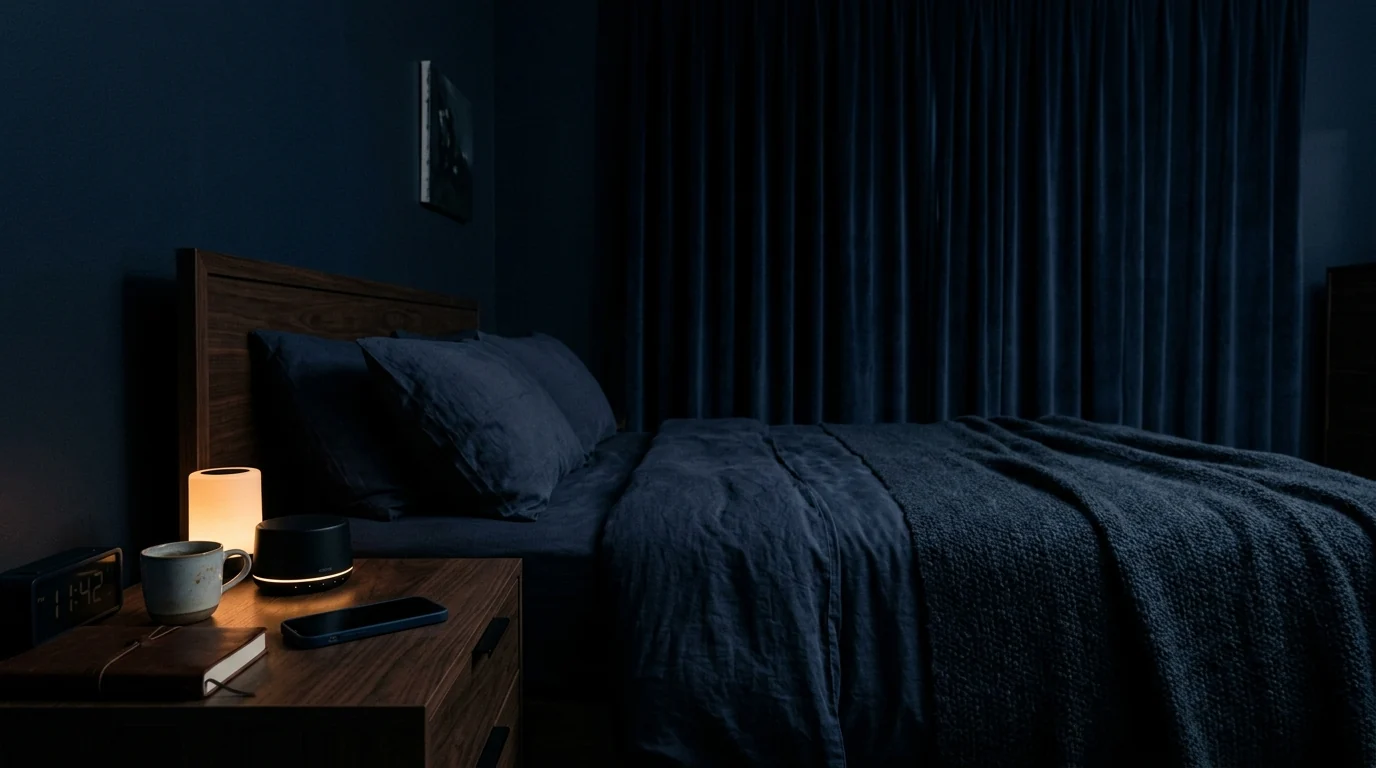
4. Complete darkness: Use blackout curtains and an eye mask. Even ambient light through closed eyelids can suppress melatonin and fragment sleep. A 3D contoured sleep mask like MZOO blocks 100% of light without pressure on the eyes - a simple $15 upgrade that many users report as transformative.
5. Cut caffeine by 2 PM: Caffeine blocks adenosine receptors — the molecule responsible for building sleep pressure — with a half-life of 5–7 hours. A 4 PM coffee may still be affecting your brain at midnight.
6. Exercise timing: Daily exercise promotes deep sleep, but high-intensity training within 2 hours of bed can cause cortisol and adrenaline spikes that delay sleep onset.
7. Avoid alcohol: Despite feeling like a sleep aid, alcohol suppresses REM sleep, increases nighttime awakenings, and produces lighter, more fragmented sleep overall.
8. Wind-down ritual: Spend 30–45 minutes in calming activities — reading a physical book, meditation, deep breathing, or gentle stretching. This activates the parasympathetic nervous system and signals the brain that sleep is coming.
9. Reserve the bed for sleep: Associative learning is powerful. Working or scrolling in bed teaches the brain that the bed is a place for wakefulness. Reinforce the bed-sleep association deliberately.
10. Manage nighttime urination: Nocturia is the leading cause of middle-of-the-night awakenings. Limit fluid intake 2 hours before bed. A “double void” technique (urinating, pausing, then trying again) ensures full bladder drainage.
11. Light meals in the evening: Heavy, high-fat meals close to bedtime increase core body temperature through digestion and raise the risk of acid reflux — both enemies of deep sleep.
12. Morning sunlight exposure: Spending 15–20 minutes outdoors within the first 30 minutes of waking (ideally direct sunlight, not through glass) triggers the cortisol awakening response and locks in your circadian clock timing for the following night.
13. Manage stress before bed: Rumination and unresolved anxiety are primary causes of sleep onset insomnia. A brief “worry dump” journal entry — writing down tomorrow’s tasks and concerns — can offload mental load and quiet the default mode network.
14. FAQ — 20 Most Asked Sleep Questions
How long is one sleep cycle? One sleep cycle averages 90 to 120 minutes and includes all stages: light sleep (N1, N2), deep slow-wave sleep (N3), and REM sleep.
How many sleep cycles do I need per night? Healthy adults need 4 to 6 complete cycles. Five cycles (7.5 hours) is the optimal target for most people — enough deep sleep for physical recovery and enough REM for cognitive function.
What happens if I wake up during REM sleep? You may feel intensely disoriented — the brain was in near-waking activity while the body was fully paralyzed. Waking from REM (rather than from the light sleep following it) can cause profound confusion and disturbing feelings.
Is the 90-minute cycle the same for everyone? No — it’s a statistical average. Individual cycles range from 70 to 120 minutes and vary by night and life stage. The first cycle of the night is typically the shortest.
Can I function on 4 hours of sleep? For the vast majority of people, no. Only a tiny fraction of the population carries a rare genetic mutation (BHLHE41 gene variant) that enables true short sleep. For everyone else, 4-hour sleep causes progressive cognitive impairment, immune suppression, and accelerated sleep debt.
What is the best time to wake up? The ideal wake-up window coincides with the end of a complete cycle — when the brain has returned to light N1 or N2 sleep. A sleep calculator identifies this window based on your intended bedtime or sleep target.
How do I calculate my sleep debt? Multiply your daily deficit (target hours minus actual hours) by the number of days. Example: needing 8 hours but sleeping 6 hours for 5 days = (8−6) × 5 = 10 hours of sleep debt.
What exactly is REM sleep? REM stands for Rapid Eye Movement — a sleep stage characterized by high brain activity similar to wakefulness, vivid complex dreaming, and complete skeletal muscle paralysis (atonia) to prevent acting out dreams.
How much REM sleep do I need? Adults need approximately 20–25% of total sleep in REM. For 7–8 hours of sleep, that’s 90–120 minutes of REM distributed across 4–5 cycles, with the largest REM blocks occurring in the final morning cycles.
Why is deep sleep important? Deep sleep (Stage N3) is when the body performs its most intensive physical restoration: cellular repair, immune reinforcement, bone and muscle rebuilding, growth hormone secretion, and neurotoxic waste clearance via the glymphatic system.
Does a nap count as a sleep cycle? A short power nap (10–20 minutes) does not complete a cycle — it stays in light sleep stages. A 90-minute nap does complete one full cycle and counts toward your total daily rest, but does not replace a full night’s restorative sleep.
What is biphasic sleep? A sleep pattern dividing rest into two segments — typically 5–6 hours at night plus a 20–90 minute afternoon siesta. Common in Mediterranean cultures and supported by research as a natural human sleep pattern.
What is circadian rhythm? Your biological clock — a ~24-hour internal timing system governed by the suprachiasmatic nucleus (SCN) in the hypothalamus. It regulates sleep-wake timing, hormone secretion, body temperature, and digestive cycles based primarily on light/dark signals.
Why do teenagers stay up and sleep in late? It is a genuine biological phenomenon called Sleep Phase Delay — a hormonally driven shift during puberty that delays melatonin secretion by ~2 hours compared to adults. Early school start times force teens to wake before their biology is ready, causing chronic sleep deprivation.
What’s the best app for sleep cycle tracking? Sleep Cycle leads for smart alarm functionality (sound analysis, light-sleep awakening). SleepScore is best for non-contact accuracy using sonar technology. Both are significantly more accessible than clinical sleep studies.
Does Apple Watch accurately track sleep stages? Yes — modern Apple Watch with watchOS and the Vitals app provides clinically validated sleep stage tracking (Core, Deep, REM) with accuracy approaching dedicated sleep trackers like the Oura Ring. The primary limitation is battery life requiring nightly charging.
How do I reset my disrupted circadian rhythm? Expose yourself to bright morning sunlight within 30 minutes of waking. Set a fixed wake-up time and maintain it every day for 1–2 weeks. Avoid blue light screens for 2 hours before bed. Eliminate naps longer than 30 minutes until the rhythm re-establishes.
What is Sleep Inertia? The state of grogginess, cognitive fog, and physical sluggishness experienced immediately after waking — at its worst when you’re awakened from deep N3 sleep. Its intensity and duration (5–60 minutes) depends directly on which sleep stage the alarm interrupted.
Is polyphasic sleep like Uberman safe? No evidence supports its long-term safety. Extreme polyphasic schedules deprive the body of slow-wave deep sleep essential for physical recovery and may cause immune dysfunction, cognitive degradation, and cardiovascular stress. It should not be pursued without medical guidance.
When should I see a doctor about my sleep? Consult a sleep specialist if you experience: loud snoring with observed breathing pauses (possible OSA — use STOP-BANG screening), persistent exhaustion despite 8+ hours of sleep, chronic insomnia affecting daily function, an Epworth Sleepiness Scale score above 10, or unexplained morning headaches.
15. Conclusion
Mastering sleep is not about blindly chasing an “8-hour” number. It requires an architectural understanding of 90-minute cycles, the four biological stages your brain cycles through each night, and the precision timing of when you wake. Waking at the wrong point in a cycle doesn’t just make you feel tired — it impairs your entire day from its first moments.
The Sleep Calculator changes that equation. Whether you use a web-based calculator, a smart alarm app like Sleep Cycle, or an advanced wearable like the Oura Ring, the underlying principle is the same: synchronize your life with your biology.
Layer in the environmental fundamentals — blocking blue light before bed, keeping your room cool and dark, maintaining consistent timing 7 days a week, getting morning sunlight, and managing caffeine and alcohol — and you transform sleep from a passive accident into a precise, optimized biological tool.
Try the sleep calculator for 7 consecutive days. Watch how your body responds to alarm-free cycle-aligned waking. Notice the difference in your morning clarity, afternoon focus, and evening energy. The compound returns of consistently excellent sleep outperform almost every other lifestyle intervention. To take it further, consider tracking your actual sleep cycles with a wearable like the Fitbit Charge 6 - the data alone will motivate lasting change.
Calculate your perfect bedtime and wake-up time. Align your sleep with natural 90-minute cycles and wake up refreshed every morning.
Sources & References
This article is based on peer-reviewed research and guidelines from leading scientific and medical institutions:
- National Sleep Foundation - Sleep Stages
- National Sleep Foundation - How Much Sleep Do We Need?
- Harvard Medical School - Healthy Sleep: Dreaming & REM
- Harvard Medical School - Sleep, Learning, and Memory
- CDC - How Much Sleep Do I Need?
- NIH / NINDS - Brain Basics: Understanding Sleep
- NIH PubMed - NASA nap study: Napping improves performance and alertness
- Ekirch, A. Roger. At Day’s Close: Night in Times Past. W. W. Norton & Company, 2005.